Exploring the realm of preventive health care covered by insurance opens up a world of possibilities. From reducing healthcare costs to early disease detection, this topic delves into the vital role insurance plays in promoting wellness. Let's delve deeper into this crucial aspect of healthcare.
As we navigate through the various types of preventive health care covered by insurance, we'll uncover the benefits, challenges, and strategies to ensure access for all.
Importance of Preventive Health Care
Preventive health care plays a crucial role in reducing overall healthcare costs by focusing on early detection and prevention of diseases before they escalate into more serious conditions. This not only helps individuals maintain good health but also saves money in the long run by avoiding expensive treatments for advanced illnesses.
Early Detection of Diseases
Preventive health care measures, such as regular screenings and check-ups, can aid in the early detection of diseases like cancer, diabetes, and heart conditions. By identifying these conditions in their initial stages, individuals have a better chance of successful treatment and management, leading to improved health outcomes.
Examples of Preventive Health Care Covered by Insurance
- Annual physical exams: Insurance plans often cover annual check-ups to monitor overall health and detect any potential issues early on.
- Vaccinations: Many insurance policies include coverage for vaccinations against preventable diseases, helping to protect individuals from infections.
- Screenings: Insurance may cover screenings such as mammograms, colonoscopies, and blood tests to screen for various conditions and diseases.
- Health education and counseling: Some insurance plans offer coverage for health education and counseling services to promote healthy lifestyle choices and disease prevention.
Types of Preventive Health Care Covered
When it comes to preventive health care services covered by insurance, there are several key types that are typically included in most plans. These services are aimed at detecting potential health issues early and preventing more serious conditions from developing.
1. Routine Check-ups and Screenings
- Annual physical exams
- Blood pressure and cholesterol screenings
- Mammograms and Pap smears for women
- Prostate exams for men
2. Immunizations and Vaccinations
- Flu shots
- Tetanus shots
- Hepatitis vaccines
- Childhood vaccinations
3. Preventive Medications
- Aspirin therapy for heart health
- Cholesterol-lowering medications
- Preventive antibiotics
- Osteoporosis medications
4. Lifestyle Counseling
- Diet and nutrition counseling
- Smoking cessation programs
- Weight management support
- Exercise programs
5. Behavioral Health Services
- Mental health screenings
- Substance abuse prevention programs
- Counseling for stress management
- Depression and anxiety treatment
Benefits of Insurance Coverage for Preventive Health Care
Insurance coverage for preventive health care plays a crucial role in encouraging individuals to prioritize their health and well-being. By providing access to preventive services without financial barriers, insurance coverage motivates people to seek regular check-ups, screenings, and vaccinations, leading to early detection and prevention of potential health issues.
Improved Health Outcomes
Insurance coverage for preventive health care can significantly improve health outcomes for individuals. Regular screenings and preventive measures help in the early detection of diseases, allowing for timely intervention and treatment. This proactive approach not only reduces the burden of illness but also enhances overall well-being and quality of life.
- Regular check-ups and screenings can detect health issues at an early stage, increasing the chances of successful treatment and recovery.
- Vaccinations provided through preventive health care coverage help prevent infectious diseases and reduce the spread of illnesses in the community.
- Access to preventive services promotes healthy lifestyle choices and disease prevention, leading to a lower incidence of chronic conditions.
According to the Centers for Disease Control and Prevention (CDC), preventive services can save lives and improve health outcomes by detecting diseases early, managing conditions effectively, and preventing the onset of chronic illnesses.
Positive Impact on Utilization
Studies have shown that insurance coverage for preventive health care increases utilization rates among individuals. When preventive services are covered by insurance, people are more likely to schedule regular appointments and follow recommended screenings and vaccinations. This proactive approach to health care not only benefits individuals but also contributes to the overall public health by reducing the prevalence of preventable diseases.
- A study published in the Journal of the American Medical Association (JAMA) found that individuals with insurance coverage were more likely to receive preventive services compared to those without coverage.
- Research from the Kaiser Family Foundation indicated that increased access to preventive care through insurance leads to cost savings in the long run by preventing expensive medical treatments for advanced diseases.
- Data from the National Institutes of Health (NIH) shows that preventive health care coverage is associated with lower mortality rates and improved health outcomes across various population groups.
Challenges in Accessing Preventive Health Care Covered by Insurance
Accessing preventive health care services covered by insurance can be a complex process for many individuals. Various barriers exist that can hinder people from receiving the necessary preventive care, leading to disparities in access among different socioeconomic groups.
Barriers to Accessing Preventive Health Care
- Lack of awareness: Some individuals may not be aware of the preventive services covered by their insurance plans, resulting in underutilization of these services.
- Financial constraints: Even with insurance coverage, out-of-pocket costs such as copayments or deductibles can pose a financial barrier for individuals, especially those from lower-income groups.
- Limited healthcare provider options: Inadequate access to healthcare providers in certain areas can make it difficult for individuals to schedule preventive care appointments in a timely manner.
- Language and cultural barriers: People from diverse backgrounds may face challenges in accessing preventive care services due to language barriers or cultural differences that affect communication with healthcare providers.
Disparities in Access to Preventive Health Care
- Socioeconomic status: Individuals from lower-income households are less likely to access preventive health care services compared to those with higher incomes, leading to disparities in health outcomes.
- Racial and ethnic disparities: Minority groups may face barriers in accessing preventive care, resulting in higher rates of undiagnosed or untreated health conditions.
- Rural vs. urban disparities: People living in rural areas often have limited access to healthcare facilities, making it challenging to receive preventive care services on a regular basis.
Strategies to Improve Access to Preventive Health Care
- Educational campaigns: Increasing awareness about the importance of preventive care and available services can help individuals make informed decisions about their health.
- Reducing financial barriers: Implementing policies to reduce or eliminate out-of-pocket costs for preventive services can make it more affordable for all individuals to access care.
- Telehealth services: Utilizing telehealth technology can improve access to preventive care for individuals in remote or underserved areas, overcoming geographical barriers.
- Cultural competency training: Healthcare providers should receive training to effectively communicate with patients from diverse backgrounds and address language or cultural barriers to care.
Last Recap
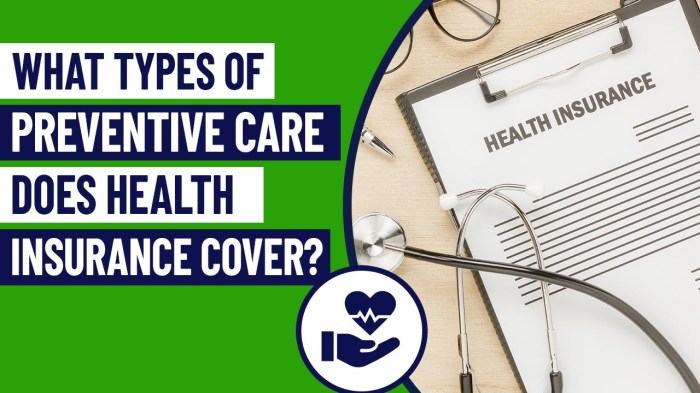
In conclusion, preventive health care coverage under insurance is not just a benefit but a necessity for individuals seeking to prioritize their well-being. By understanding the importance, types, benefits, and challenges, we pave the way for a healthier future for all.
FAQs
What preventive health care measures are typically covered by insurance?
Preventive services such as vaccinations, screenings, and annual check-ups are commonly covered by insurance.
How does insurance coverage for preventive health care encourage individuals to prioritize their health?
Insurance coverage acts as a financial incentive for individuals to seek preventive care, leading to better health outcomes.
What are some barriers individuals may face in accessing preventive health care services covered by insurance?
Barriers include lack of awareness, high deductibles, and limited provider networks that may hinder access to preventive care.